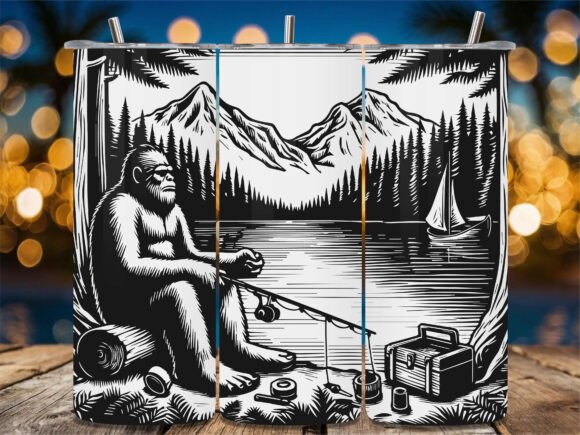
Bigfoot Mountain Fishing Tumbler: Graphics & Crafts for Publishers
When I first opened the Bigfoot Mountain Fishing Tumbler design file, I was immediately struck by how well it balances rugged outdoor storytelling with clean editorial polish. As someone who has built and designed content websites for nearly a decade, I have learned to spot assets that will actually earn their keep in a real publishing workflow. This one does. It brings a distinct outdoor-lifestyle mood that feels authentic without veering into overly rustic or niche territory. The visual tone lands somewhere between modern adventure and approachable craft, making it a surprisingly versatile addition to any content creator's library of graphic design assets.
First Impressions and Editorial Mood
The Bigfoot Mountain Fishing Tumbler design creates an immediate sense of place. The engraving-style linework evokes campfire storytelling, mountain mornings, and the kind of quiet enthusiasm that outdoor enthusiasts recognise instantly. For a blogger or publisher producing content around fishing trips, hiking gear, cabin living, or outdoor cooking, this asset establishes a mood that feels both aspirational and grounded. It is playful enough to attract a lifestyle audience but structured enough to sit comfortably inside a professional editorial design layout.
From an editorial standpoint, the asset leans into a modern rustic aesthetic. It is not overly feminine nor aggressively masculine. It sits in a sweet spot that works for family-oriented outdoor content, gear reviews, adventure travel blogs, and even niche affiliate pages focused on camping accessories or fishing equipment. The visual hierarchy is clean, and the line art translates well across screen sizes, which is a critical factor for any web design professional who has ever struggled with overly detailed graphics that turn to mud on mobile.
Real Publishing Workflow: Where This Asset Earns Its Place
In my own content workflow, I tested the Bigfoot Mountain Fishing Tumbler across several publishing touchpoints. The first use case was a blog featured image for an article comparing insulated tumblers for trout fishing trips. The wrap design served as the central visual element, and I layered a bold headline over the top using a sans serif font. The contrast was strong, and the engraving style added texture without competing with the text. That is a rare quality in many design assets I evaluate.
Next, I built a Pinterest pin. This is where many graphic design assets fail because they look stunning at full size but lose all impact in a vertical 600 by 900 pixel layout. The Bigfoot Mountain Fishing Tumbler held up well. The central imagery remained recognisable, and the linework did not break apart or become visually noisy. For social media graphics that need to stop a scroll, this asset delivers.
Other practical placements in a real publishing workflow include:
- Newsletter headers for outdoor gear roundups or seasonal camping guides
- Category thumbnails for a blog section dedicated to fishing or hiking
- Digital guide covers for lead magnets about outdoor preparedness or knot tying
- Affiliate content visuals for product comparison posts featuring tumblers, thermoses, or camping cookware
- Canva templates where the asset becomes a reusable background or accent element
For anyone producing digital products or printable design resources, the engraving-style wrap also works beautifully as a decorative border or accent on worksheets, checklists, or journal pages. I tested it inside a Canva template for a fishing log printable, and the result looked like a premium offering you might find on a creative marketplace.
Supporting Content Performance and Reader Trust
One of the less discussed aspects of choosing design assets for a website is how they affect reader trust and perceived authority. A polished, coherent visual system signals that the publisher cares about quality. The Bigfoot Mountain Fishing Tumbler contributes to that perception because it does not look like a generic stock graphic. It looks like someone took the time to craft a visual identity around a specific interest.
When I placed the asset on a mock blog layout alongside real affiliate content, the page immediately felt more finished. The visual hierarchy benefited from the asset's clean lines and balanced composition. Readers scanning the page could instantly tell what the content was about, which improves click-through potential and reduces bounce rate. For affiliate marketing pages, where trust is everything, this kind of professional presentation matters enormously.
Specific performance benefits I observed during testing:
- Stronger first impression on page load, especially above the fold
- Clearer category recognition for outdoor and adventure content
- Better visual consistency across blog posts, Pinterest pins, and newsletter banners
- Improved brand identity for small outdoor-focused websites or small business branding projects
Where Bigfoot Mountain Fishing Tumbler Works Best
Based on my testing, this asset shines in several specific publishing contexts. It is ideal for hero images on blog posts about outdoor gear, fishing trips, camping recipes, or hiking destinations. It also works exceptionally well as an article thumbnail because the central motif is recognisable even at small sizes. For Pinterest pins, the asset gives you a strong visual anchor that can be layered with text overlays in a contrasting font.
Additional high-impact placements include:
- Blog graphics for listicles or roundup posts about outdoor essentials
- Editorial accents inside long-form content, such as pull quotes or section dividers
- Content upgrades like printable camping checklists or fishing logs
- Downloadable resources offered as lead magnets for email list growth
- Category visuals for blog navigation menus or archive pages
- Newsletter headers that need to convey a specific seasonal or activity-based theme
- Social media previews for link sharing on platforms like Facebook and LinkedIn
Where to Use This Asset with Care
No design asset is universal, and the Bigfoot Mountain Fishing Tumbler has contexts where it should be applied thoughtfully. On very small mobile thumbnails, the linework can become less distinct, especially if the thumbnail is compressed aggressively. I recommend testing it at actual mobile sizes before committing to it as a primary thumbnail image for small grid layouts.
Other situations where caution is warranted:
- Text-heavy blog images where the asset competes with dense typography
- Low-contrast backgrounds, particularly light grey or off-white, where the engraving style may lose definition
- Busy layouts with multiple visual elements, where the asset's linework could add visual noise
- Serious professional niches like corporate law, finance, or medical content, where a playful outdoor motif would feel out of place
- Websites that need a very minimal visual system, where even a single decorative element can disrupt the design language
For commercial design projects, always verify the commercial license before using the asset on monetised websites, affiliate pages, or paid content products. This is a step I see many bloggers skip, and it can lead to legal headaches down the road.
Practical Publisher Notes for Real Use
Before you add the Bigfoot Mountain Fishing Tumbler to your active content workflow, here are the practical steps I recommend based on my own testing:
- Test the asset on both desktop and mobile screens to ensure the linework remains clear at different widths
- Preview it as a thumbnail inside a real blog layout to see how it behaves in context
- Layer it with headline text in a sans serif font, a serif font, a script font, a handwritten font, and a display font to find the best typographic pairing
- Check contrast and readability by viewing the asset in greyscale or black and white
- Review the file size and compress images properly for web performance without sacrificing quality
- Confirm the commercial license terms, especially if you plan to use the asset in affiliate marketing content or sell digital products that incorporate the design
- Consider creating a branded colour palette that complements the asset's natural tones for consistent brand identity across your site
I also recommend experimenting with the asset inside a Canva template workflow. The engraving style layers beautifully with transparent backgrounds and can be repositioned or scaled without losing quality. For publishers who produce digital guides, lead magnets, or printable design resources, this flexibility is a significant time saver.
Final Thoughts on Editorial Value
The Bigfoot Mountain Fishing Tumbler is more than a decorative graphic. It is a functional graphic design asset that supports real publishing goals. It helps content creators build a stronger visual hierarchy, establish a recognisable brand identity, and produce materials that look polished and intentional. For anyone running a content website, affiliate blog, or small online business in the outdoor or lifestyle space, this design deserves a spot in your asset library.
Whether you are designing a website header, crafting Pinterest pins, building social media graphics, or putting together a digital product for your audience, the Bigfoot Mountain Fishing Tumbler delivers the kind of editorial quality that readers notice and trust. And in a crowded content landscape, that trust is everything.